Walk into a bouldering gym for the first time and the climbing is the easy part — it’s the language that throws you. “Just flash the crimpy slab, then drop-knee into the jug.” Right.
Here’s the scene vocabulary in plain English. It’s pulled straight from SENDO’s built-in Beginner zone, where you can long-press any of these words anywhere in the app to get the definition on the spot. Hover any card to see it on the wall.
Holds — the things you grab
Every climb is a set of holds bolted to the wall. The shape decides how you grip it.
JugA big, easy hold you can wrap your whole hand around. The friendliest thing on the wall.
Jug
CrimpA small edge you hold with just your fingertips, fingers bent. Powerful, but hard on the tendons — build up slowly.
Crimp
SloperA rounded, holdless-feeling bulge with no edge. You hang on it with open-hand friction and body tension, not grip.
Sloper
PinchA hold you squeeze between thumb and fingers, like pinching a book off a shelf.
Pinch
PocketA hole that only fits one, two, or three fingers. A one-finger pocket is a “mono”.
Pocket
Moves — what you do with your body
Climbing well is mostly footwork and body position. A few moves come up constantly:
DynoA dynamic jump where both hands leave the wall to catch a far hold. Commit fully — half a dyno never sticks.
Dyno
MantlePressing down on a hold to push yourself up over it, like climbing out of a swimming pool. The classic top-out.
Mantle
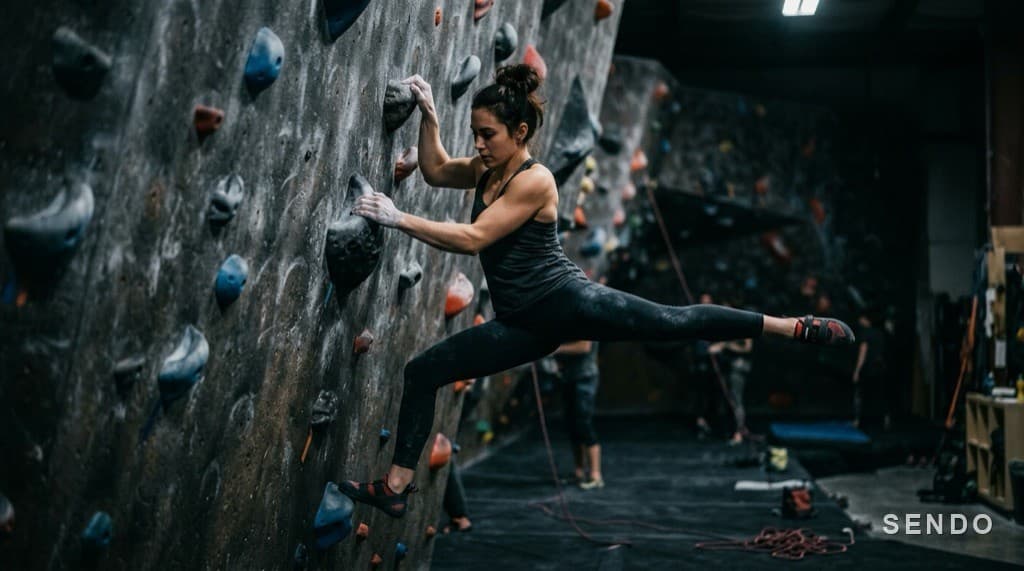
FlagExtending a free leg out to one side for balance instead of standing on a foothold — it stops you “barn-dooring” off.
Flag
Drop kneeTurning a knee inward and down to twist your hip into the wall, extending your reach and easing the pull on your arms.
Drop knee
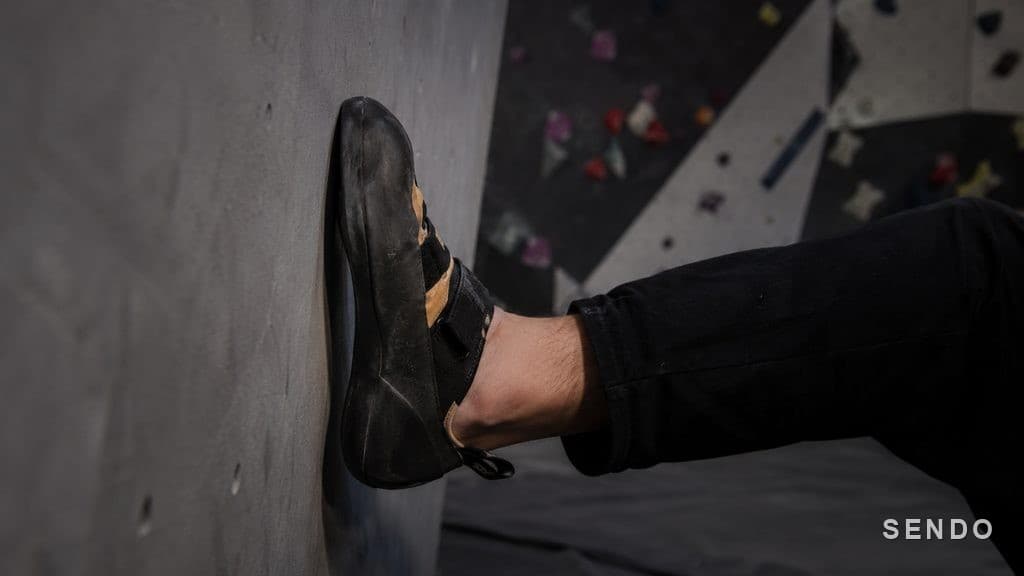
SmearPressing the sole of your shoe flat against the wall for friction when there’s no real foothold. The heart of slab.
Smear
Heel hookHooking your heel over a hold and pulling with your leg to take weight off your arms — a steep-wall staple.
Heel hook
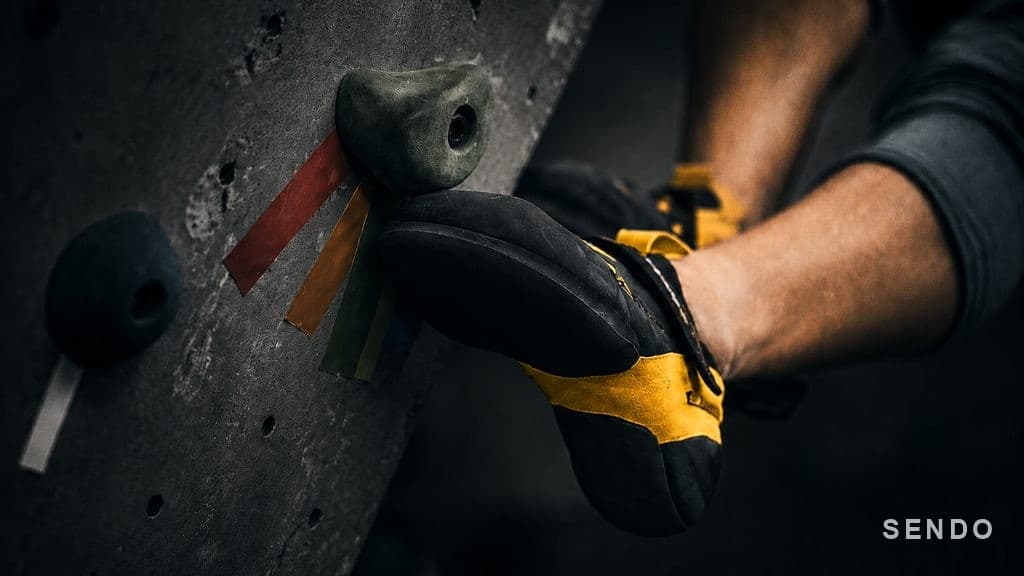
Toe hookCatching the top of your toes behind a hold to stop your body swinging out on overhanging ground.
Toe hook
Walls — the angle you’re fighting
The wall’s angle changes everything about how a climb feels and what it demands.
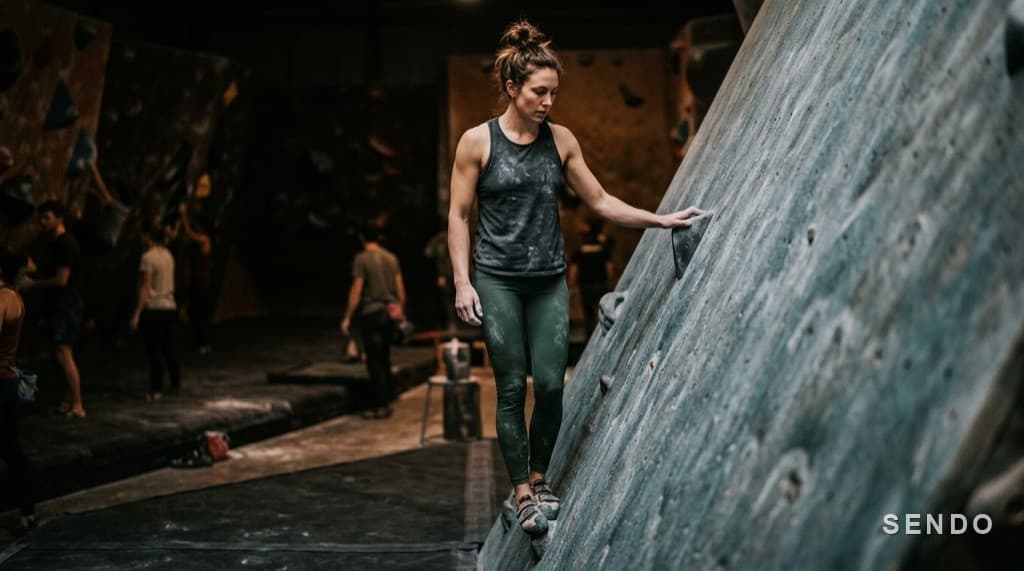
SlabA wall that leans back at less than vertical. It’s about balance and trusting your feet, not pulling hard.
Slab
VerticalA wall at roughly 90° — dead straight up. Holds carry your weight directly, so efficient movement pays off.
Vertical
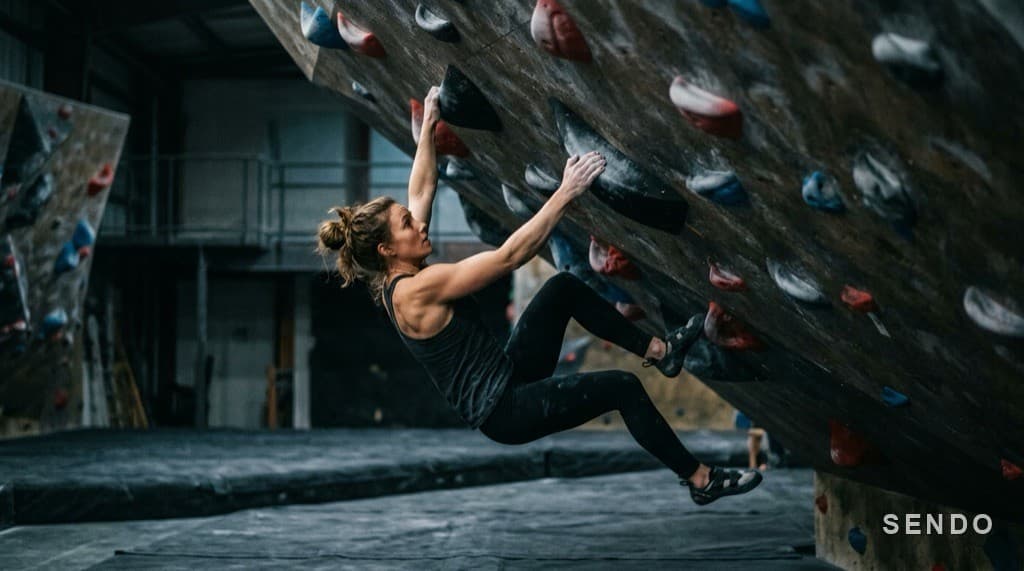
OverhangA wall that leans out past vertical, hanging over you. The steeper it gets, the more it throws weight onto your arms and core.
Overhang
Logging words — how you talk about a climb
These are the words you’ll use to describe a go — and the ones SENDO logs for you.
SendTo climb a route cleanly start to finish, no falls. “I sent it!”
Send
FlashSending on your first try, but with beta. First try with zero info is an “onsight”.
Flash
AttemptA single try you didn’t finish. Logging attempts shows how a project is coming along.
Attempt
ProjectA climb at your limit that takes many sessions to send. Working it move by move is “projecting”.
Project
BetaThe specific sequence of moves that unlocks a climb. Unwanted advice is “beta spray”.
Beta
CruxThe hardest move or section of a climb — where most attempts end.
Crux
Grades — how hard is hard
Difficulty has a few different scales depending on where you are. SENDO speaks all of them and converts between them automatically.
V-scaleThe bouldering scale used in most of the world, from V0 upward. Higher number, harder climb.
V-scale
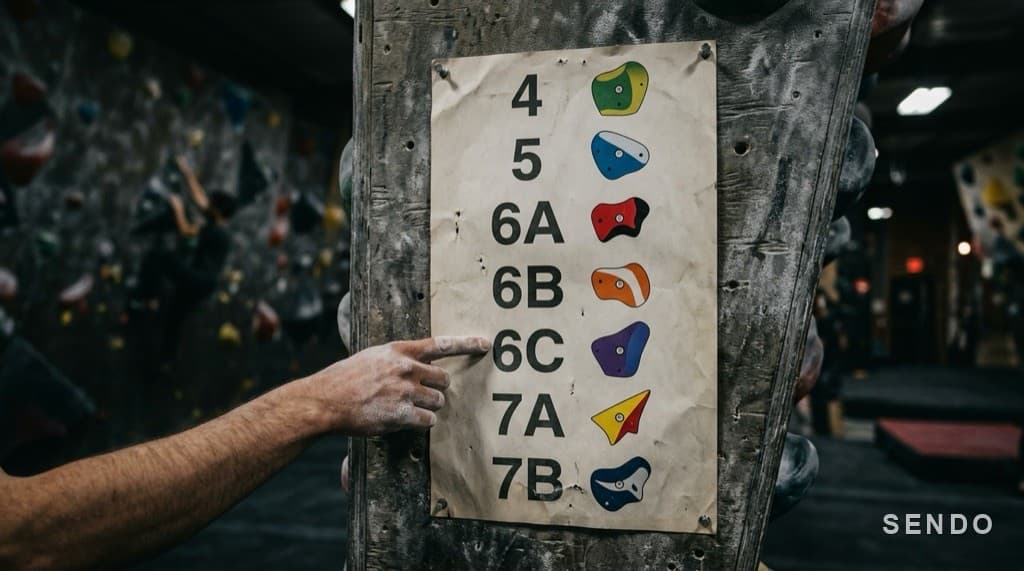
Font scaleThe Fontainebleau scale common in Europe (6A, 6B, 7A…). Letters and “+” split each number into finer steps.
Font scale
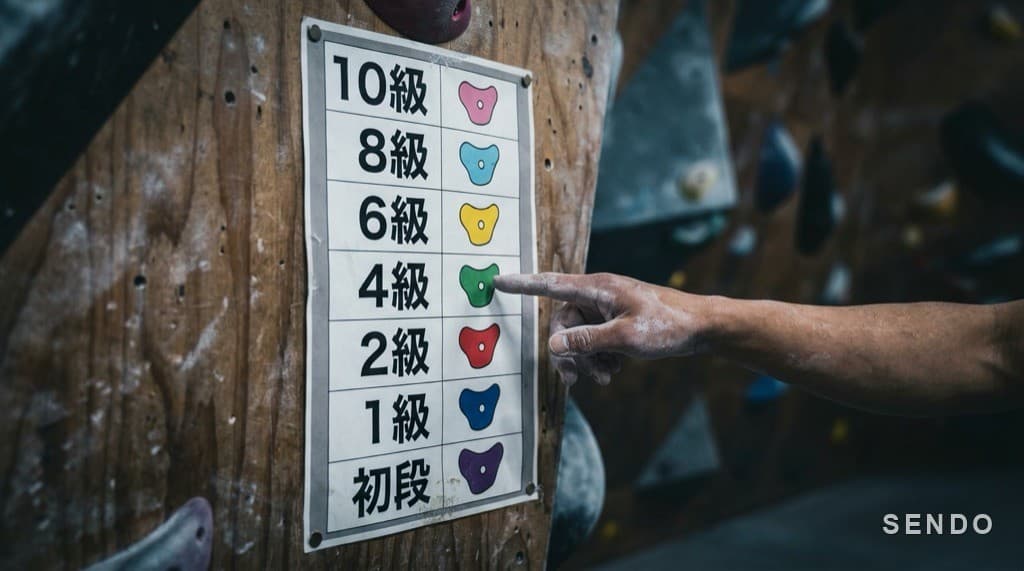
Kyu / Dan (級/段)The Japanese system: kyu counts down from easy (10級) to 1級, then dan counts up (初段, 二段…) into the hardest grades.
Kyu / Dan (級/段)
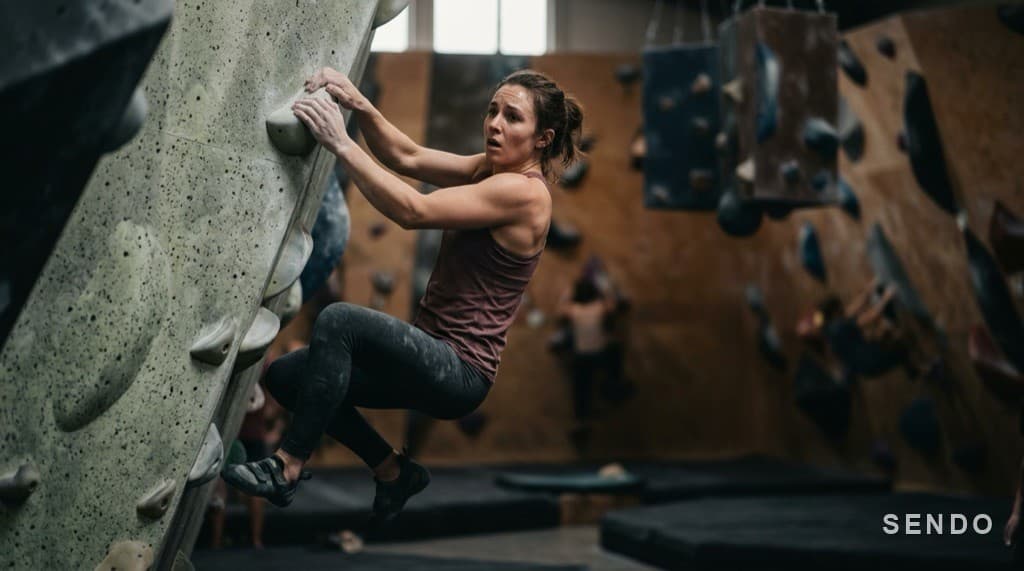
SandbagA climb graded easier than it actually feels. The opposite — graded generously — is “soft”.
Sandbag
Gym etiquette — don’t be that person
The unwritten rules. Learn these on day one and the gym will love you.
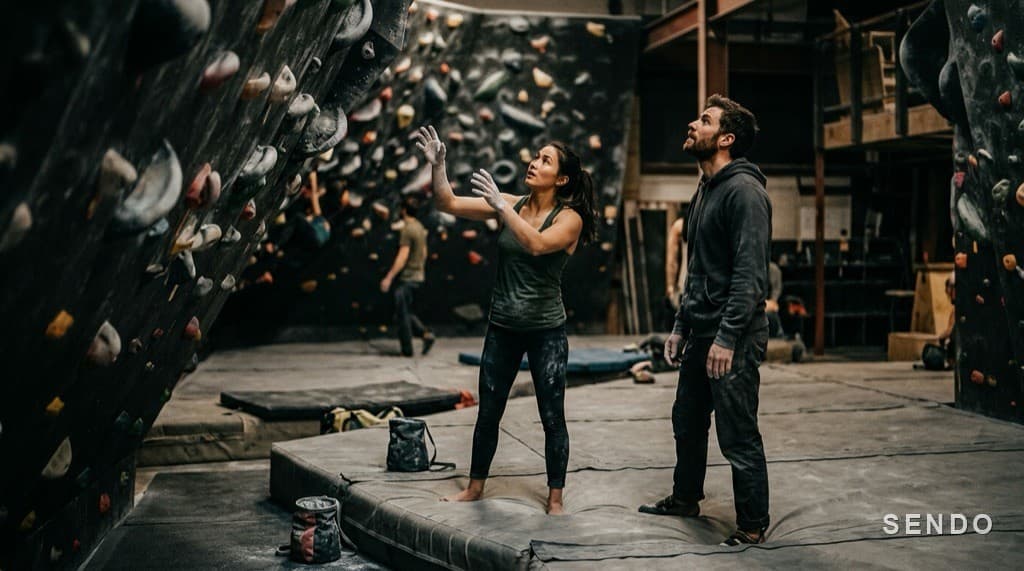
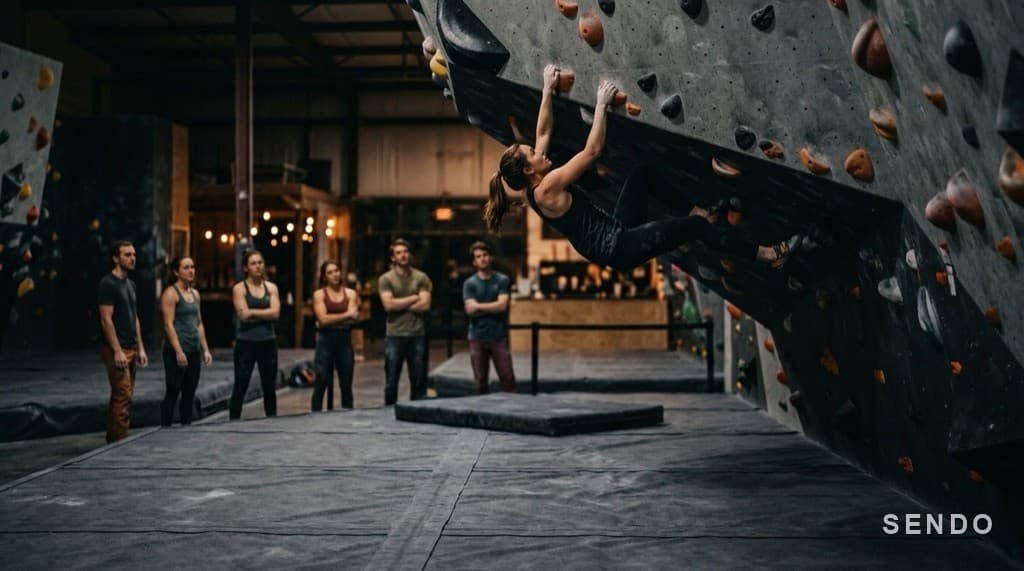
Falling zoneThe mat a climber could fall onto. Never walk, sit, or climb under someone who’s on the wall.
Falling zone
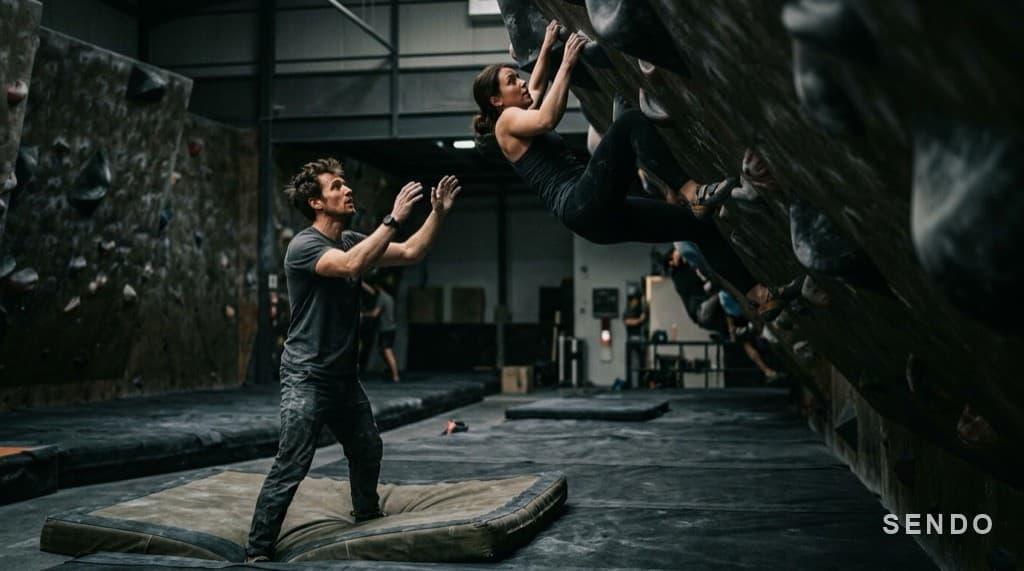
SpottingGuiding a falling boulderer toward the mat and protecting their head — you steer the fall, you don’t catch their weight.
Spotting
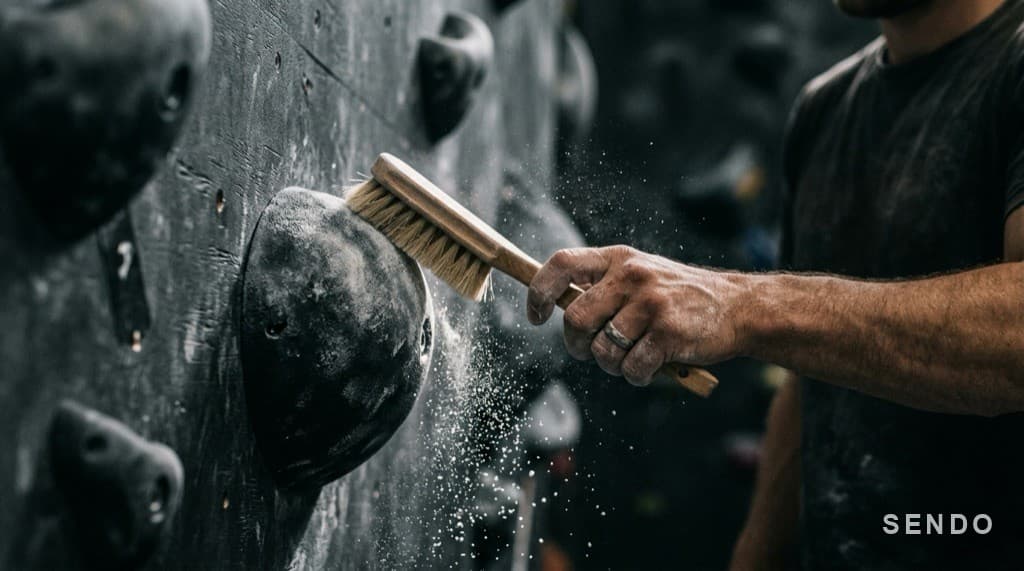
BrushingBrushing chalk and skin off holds to restore friction. Brush your tick marks — it keeps climbs good for everyone.
Brushing
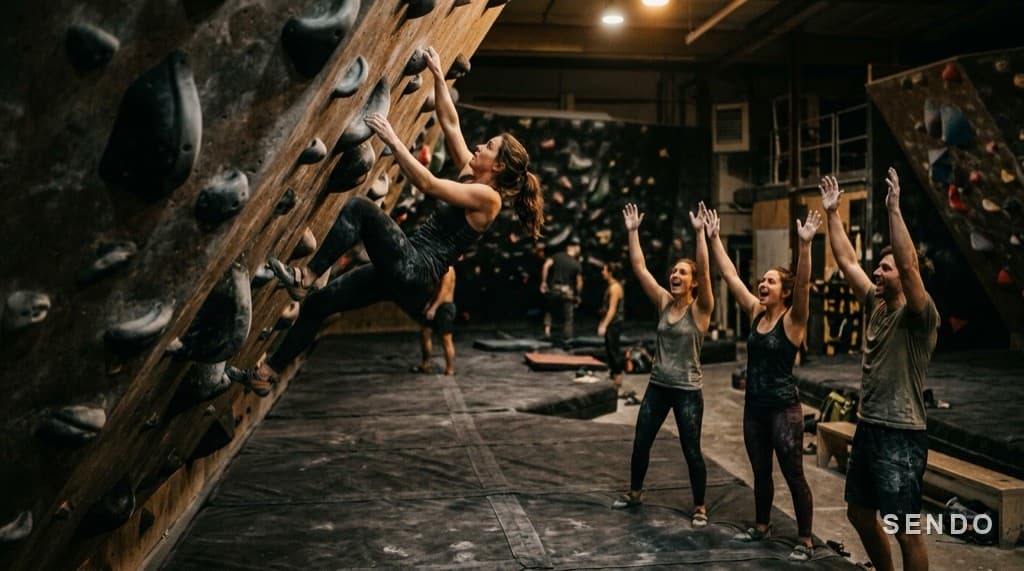
Send trainA group taking turns and cheering each other up a climb. Encouraged — just mind the falling zone and share.
 SENDO
SENDO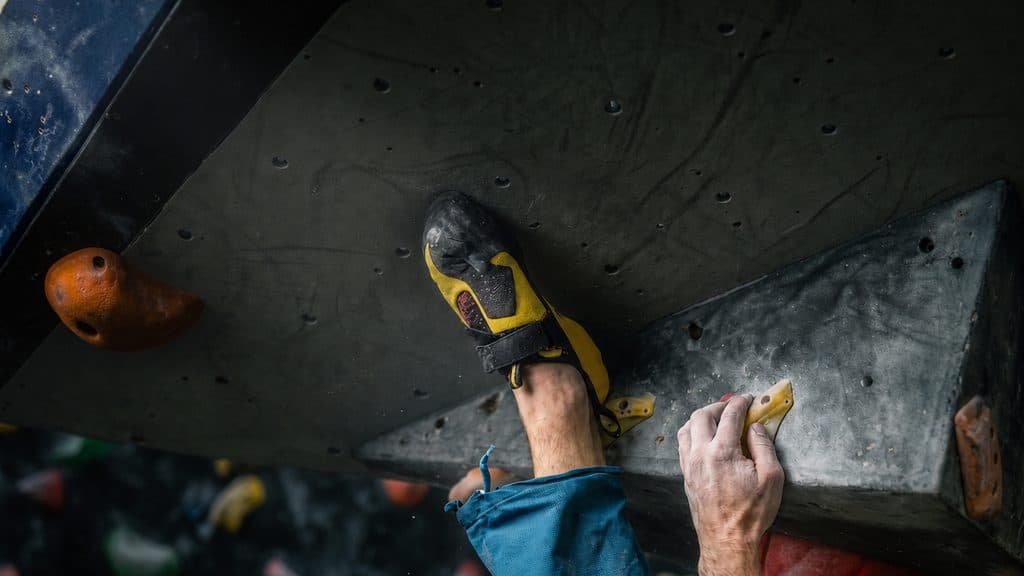
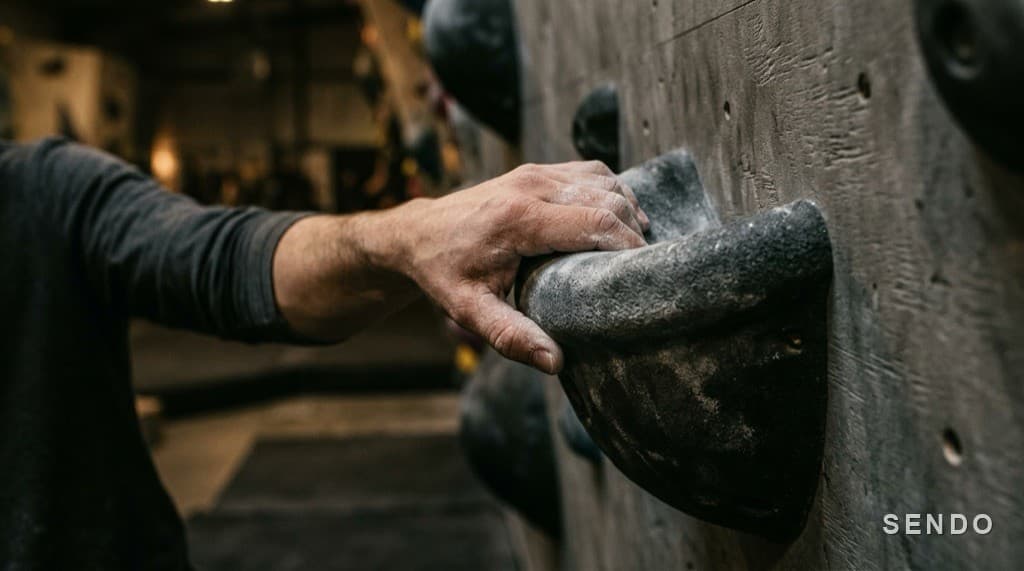 Jug
Jug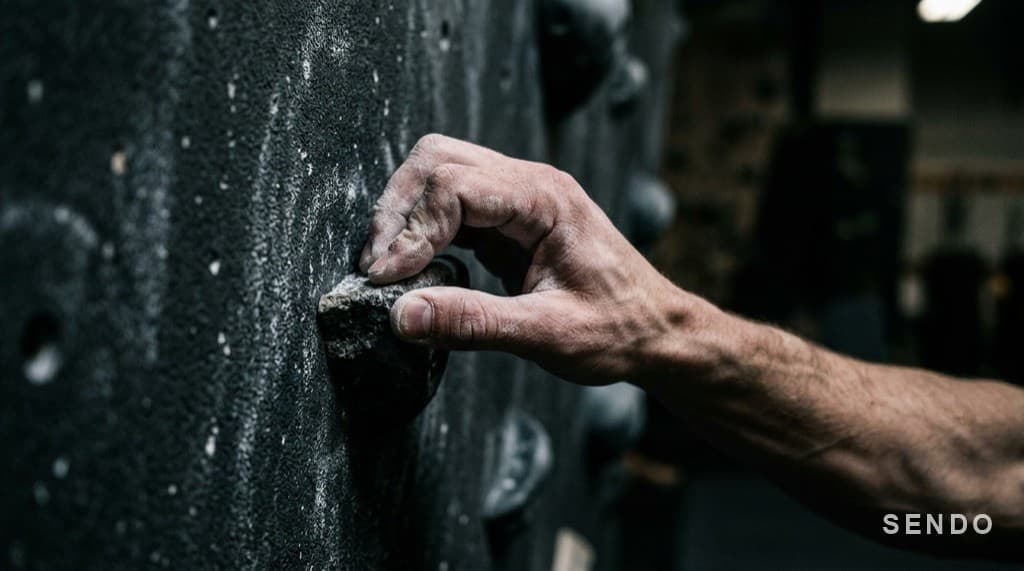 Crimp
Crimp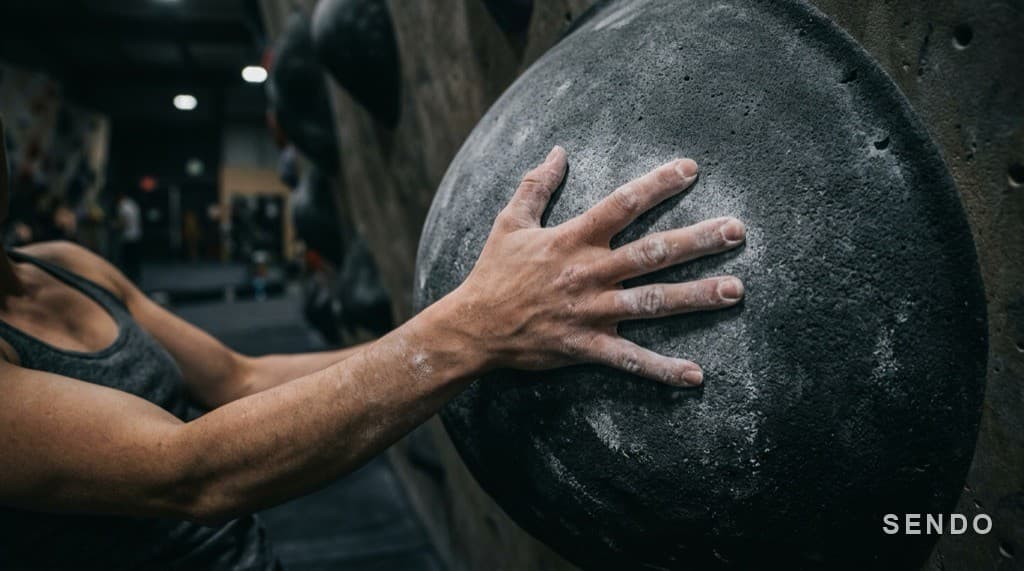 Sloper
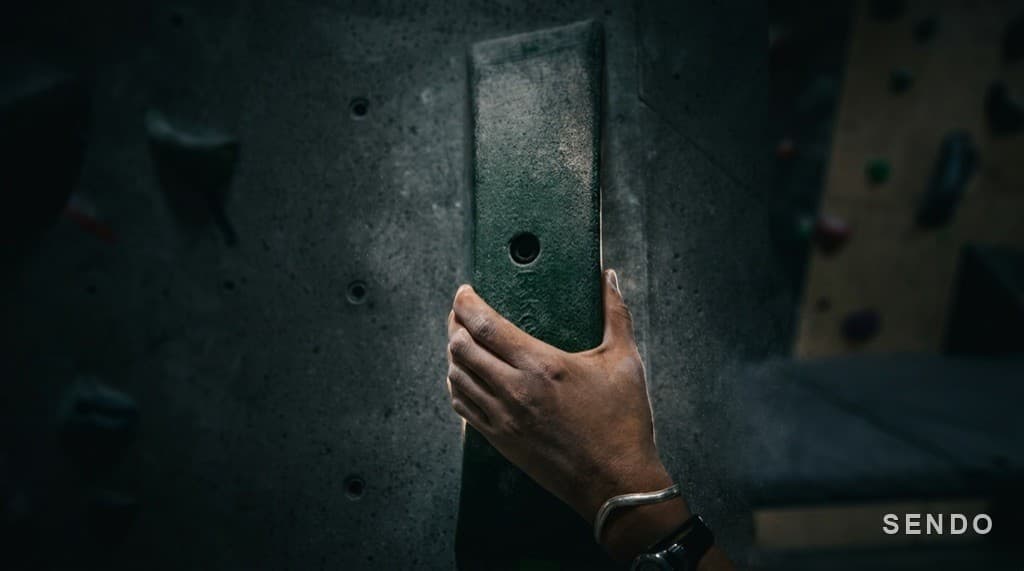 Pinch
Pinch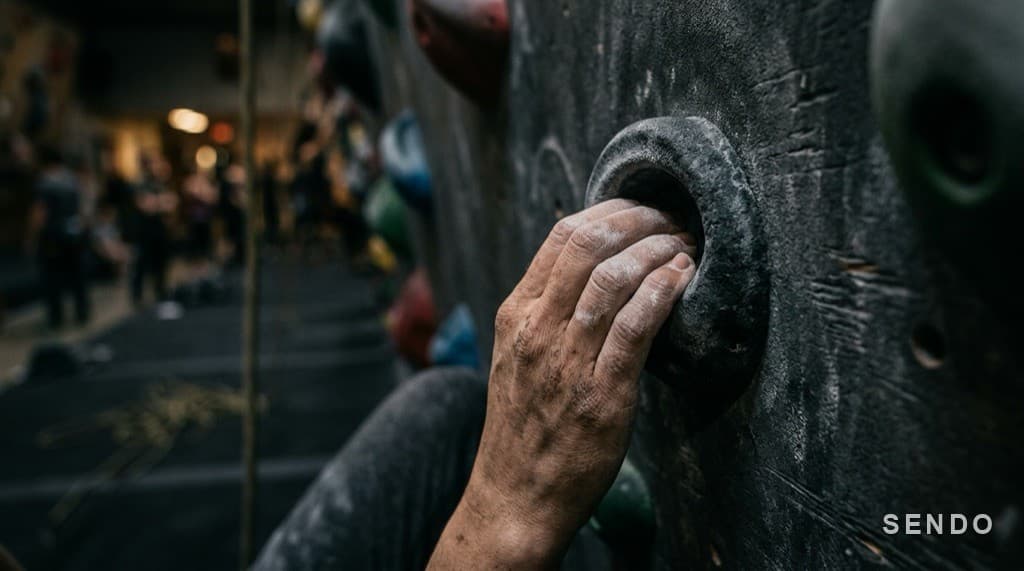 Pocket
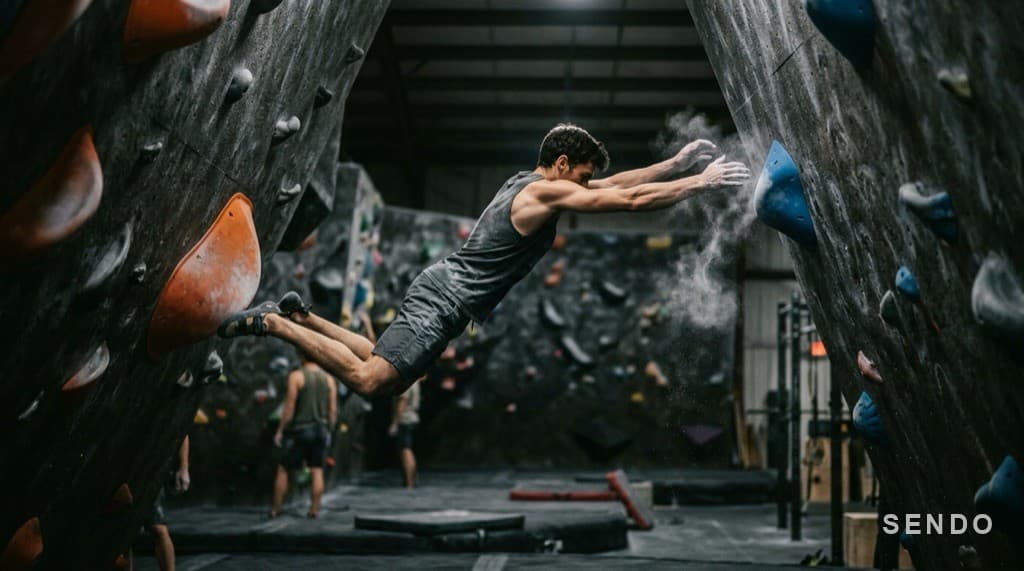 Dyno
Dyno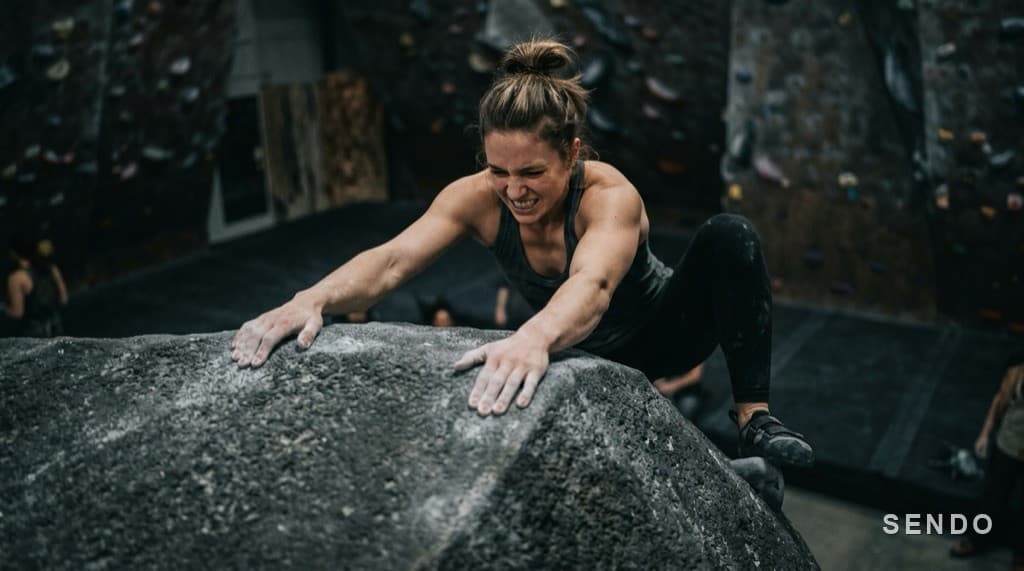 Mantle
 Flag
Flag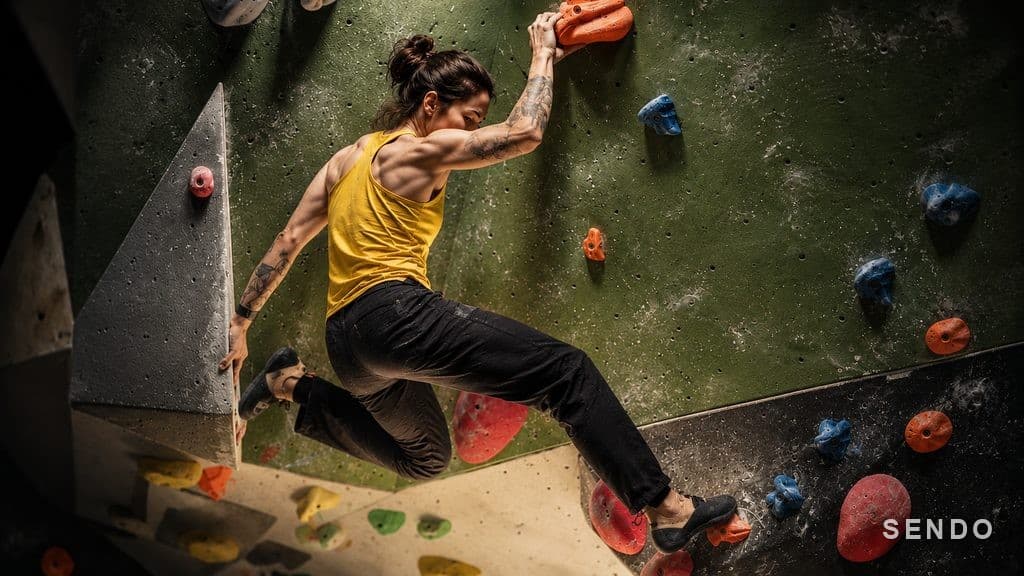 Drop knee
 Smear
Smear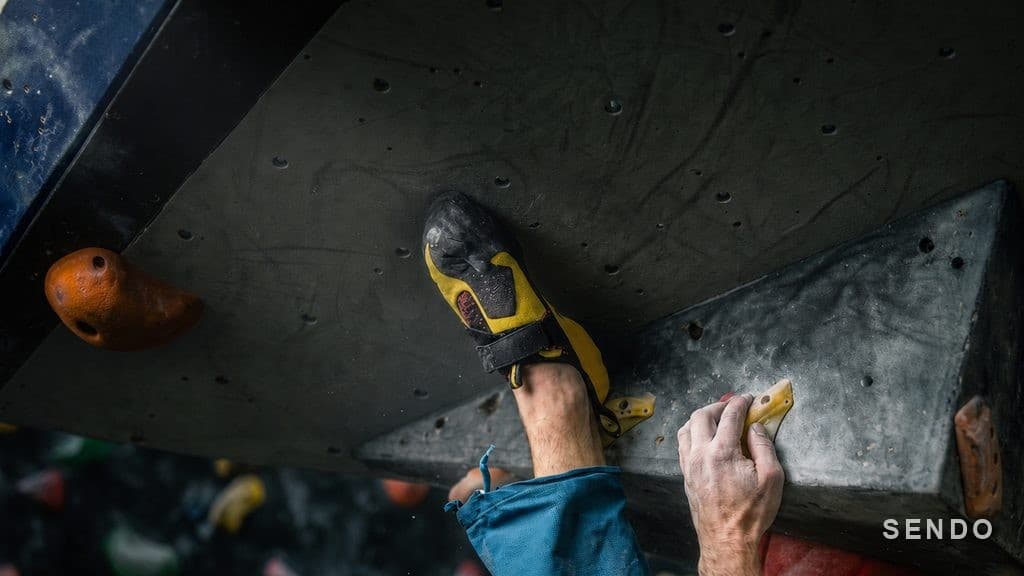 Heel hook
 Toe hook
 Slab
Slab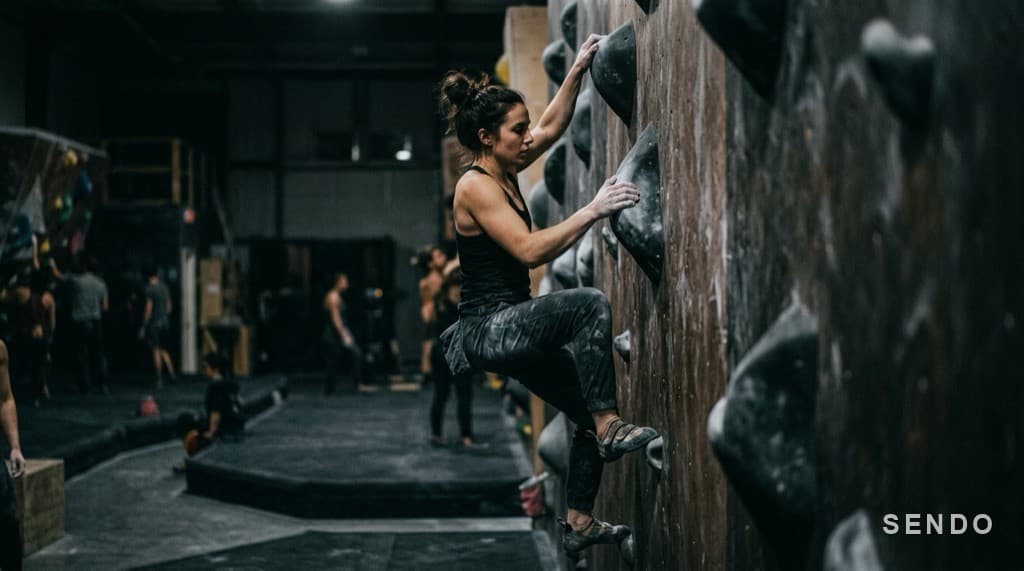 Vertical
 Overhang
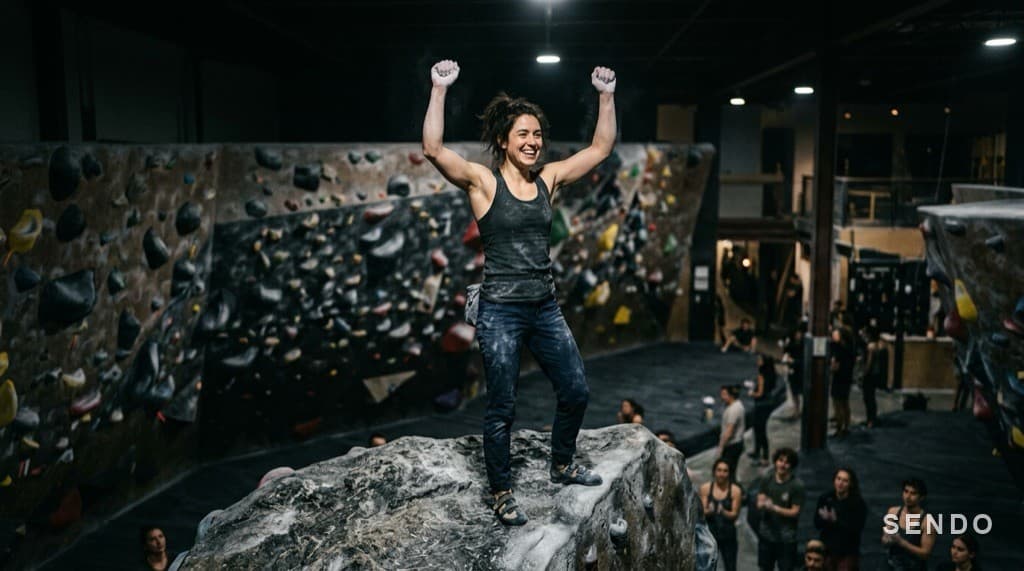 Send
Send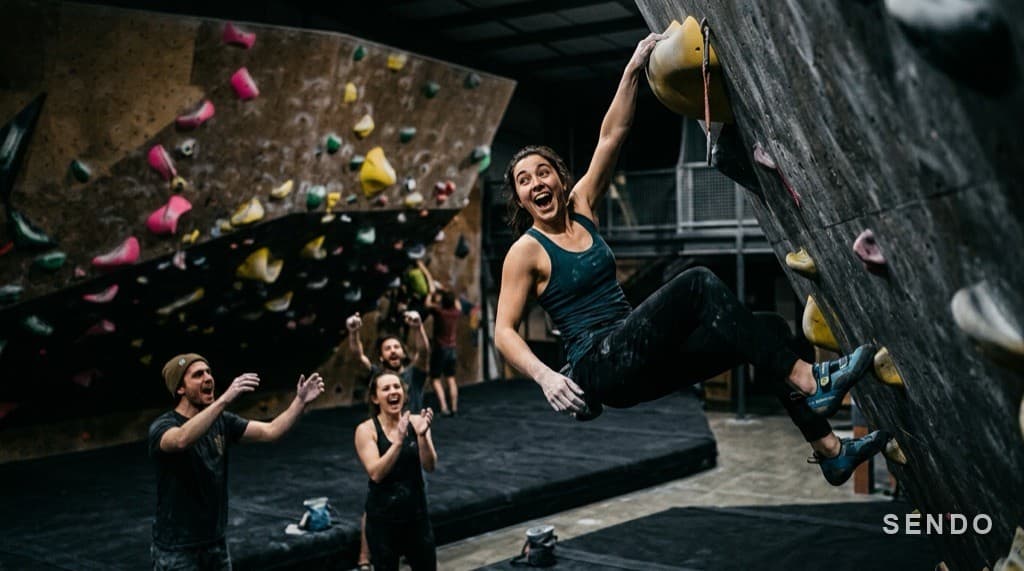 Flash
Flash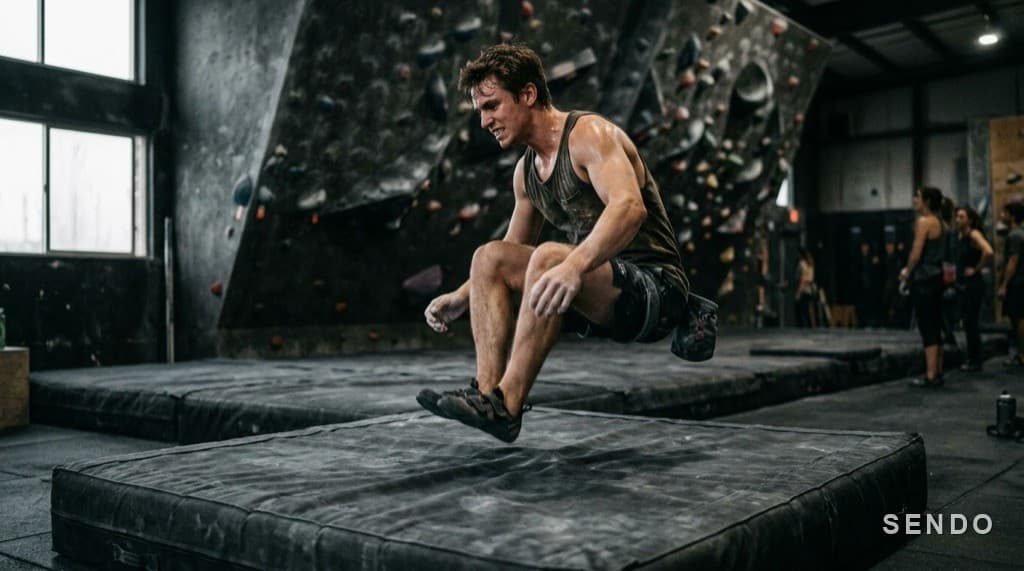 Attempt
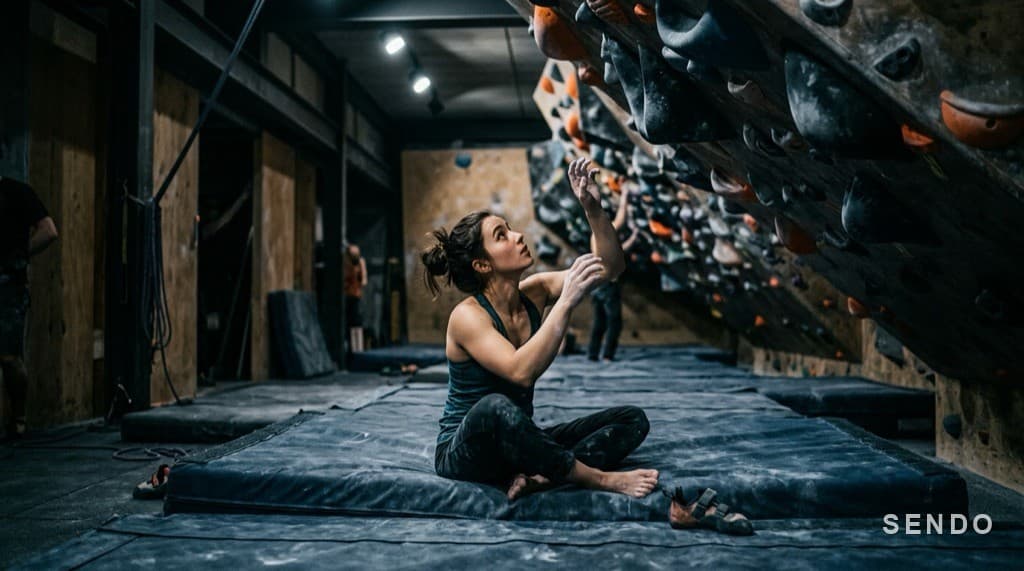 Project
 Beta
Beta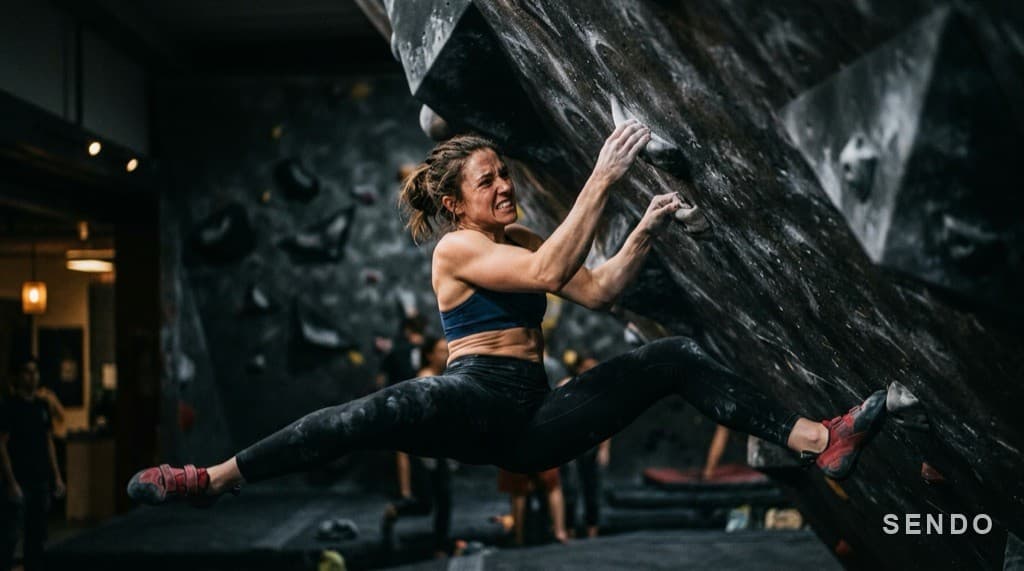 Crux
Crux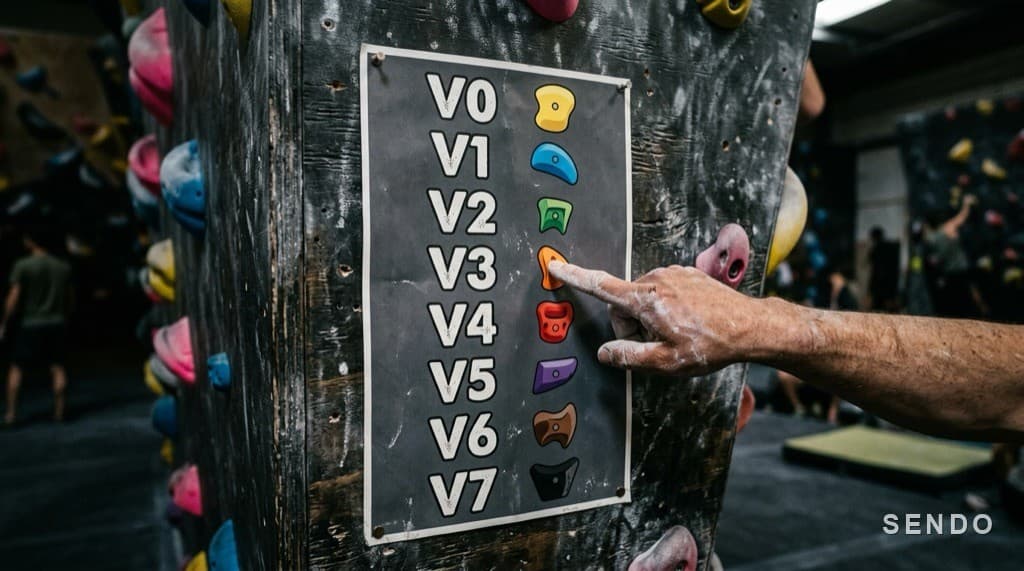 V-scale
 Font scale
 Kyu / Dan (級/段)
 Sandbag
 Falling zone
 Spotting
 Brushing
 Send train